The nugget
You don't have to wait for a crisis to find your resilience. The tools can be learned now, before you need them.
A question to think about
If you could learn one research-based skill this year that made hard days easier, what would you want it to help with?
Rationale and support
Why I'm writing this
Most of us already know what's good for us. Move more. Sleep better. Put the phone down. Follow through on the plans we make at work. Knowing is the easy part. Doing it, day after day, especially when things get hard, is where most of us get stuck.
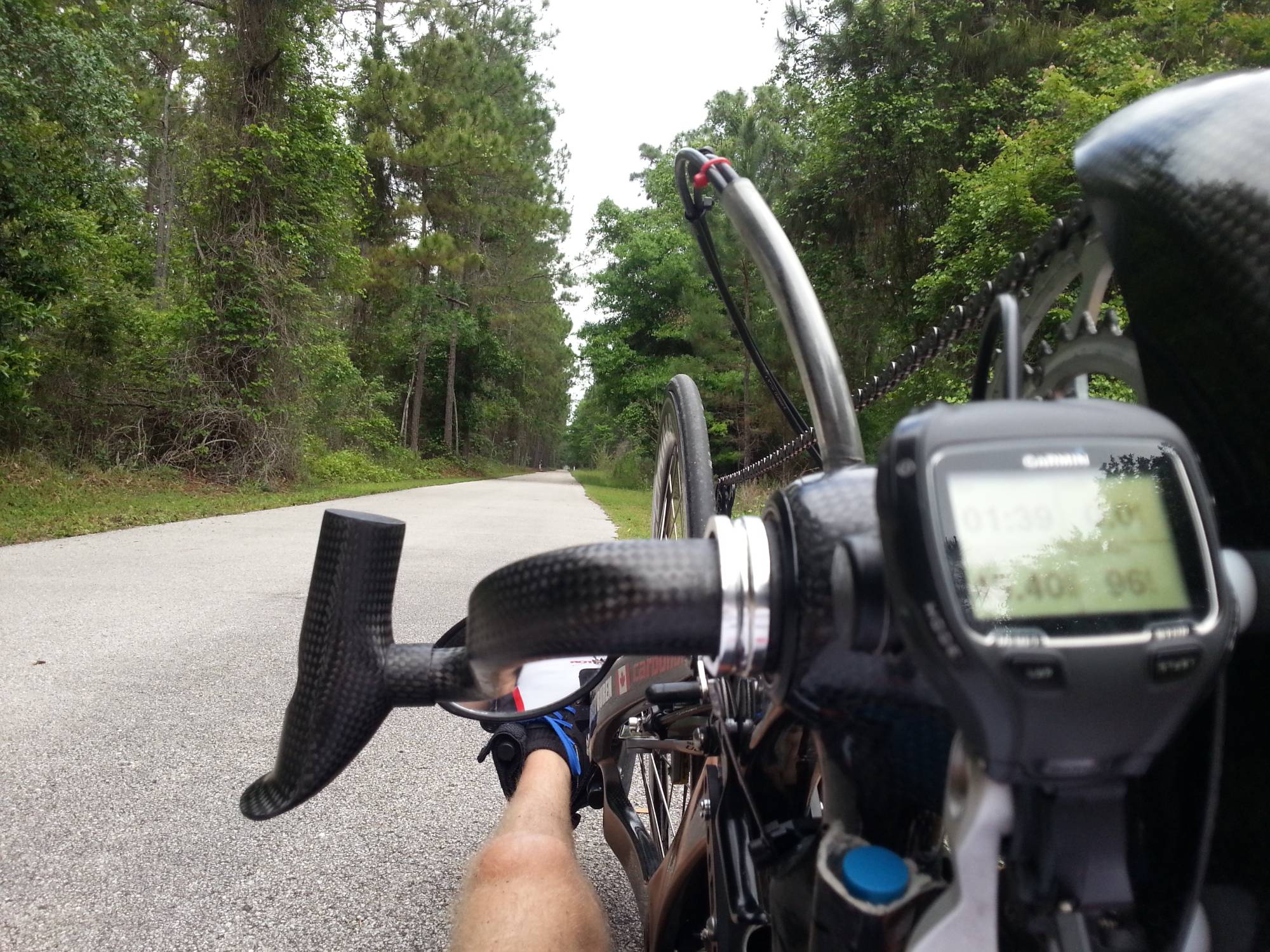
I've spent a lot of my life on that problem. After breaking my back, I set big goals and found ways to reach them: going back to work, competing in para sports at the international level, and racing at the IRONMAN World Championship. Then I went back to school to understand how I'd done it, and how I could help others do the same.
In 2026 I completed my PhD in Kinesiology at UBC Okanagan, focused on spinal cord injury, pain and behaviour change. Along the way, my colleagues and I published a scoping review in Epidemiologic Reviews and a national survey of 200 Canadians living with spinal cord injury in Archives of Physical Medicine and Rehabilitation. I also designed and delivered a program built around a toolkit of practical strategies, grounded in well-established theories of behaviour change.
My goal is simple: to share what I've learned so it can help others.
What resilience means here
Resilience often gets talked about as something you either have or you don't. I don't see it that way. Much of it is built from things you can learn: how you read a hard moment, what you do next, who you have beside you, and the behaviours you come back to when things don't go to plan.
The best time to build those tools is before you need them. On a good day, you have the energy to practise. On a hard day, you reach for what you've already got.
What the series looks like
Every other week, I'll share one theory or tool from the science of behaviour change. Each post follows the same shape:
- The nugget: one line you can use that day.
- A question: something to think about in your own life or work.
- Rationale and support: what the idea is, the research behind it, what it means for organizations, and what it means for you.
- The reminder: the nugget again, worded a little differently so it lands twice.
Every post lists its sources at the end, so you can read the papers for yourself.
Where it starts
The first posts look at why behaviours happen, or don't. Next up is COM-B, a model from Susan Michie and colleagues that asks whether you have the capability, the opportunity and the motivation to do something. After that comes self-efficacy: where confidence really comes from. Later posts move on to the tools themselves, and how to match the right tool to the moment.
What it means at work
Organizations spend a lot on change: new strategies, new systems, new programs. Almost all of it depends on people doing something differently on a Monday morning. The ideas in this series are the same ones I bring to talks and workshops, to help teams follow through on the plans they've already made.
What it means for you
You don't need to wait for a setback to start. Take one idea from each post, try it, and keep what works. Not every tool fits every person, and that's normal. It's rarely one thing. The mix that works for you is yours to find, and it can change over time.
Try this today
Think about the last hard day you had. Write down one thing that helped, even a little: a walk, a call with a friend, a few slow breaths, a plan for the next morning. That's the start of your toolbox.
The reminder
Resilience isn't something you wait for. It's something you can build, one tool at a time. I hope you'll follow along.
Sources
- Buren, R. C., Noguchi, K. S., Holtzman, S., & Martin Ginis, K. A. (2026a). Psychosocial predictors of spinal cord injury pain: The Canadian Spinal Cord Injury Pain Survey. Archives of Physical Medicine and Rehabilitation. Advance online publication. https://doi.org/10.1016/j.apmr.2026.04.003 (opens in a new tab)
- Buren, R., Ponzano, M., Adams, N. T., Jun, J., & Martin Ginis, K. A. (2026b). Addressing health inequities in treating neuropathic pain: A scoping review of cognitive behavioral therapies, mindfulness, and meditative-based interventions. Epidemiologic Reviews. Advance online publication. https://doi.org/10.1093/epirev/mxag002 (opens in a new tab)