
Skip to content
Robert Buren, PhD Behaviour Scientist & Coach, home

Research

The research behind the work

Dr. Buren is a published scientist. His PhD in Kinesiology looked at pain after spinal cord injury, and at what people can actually do about it, day to day.

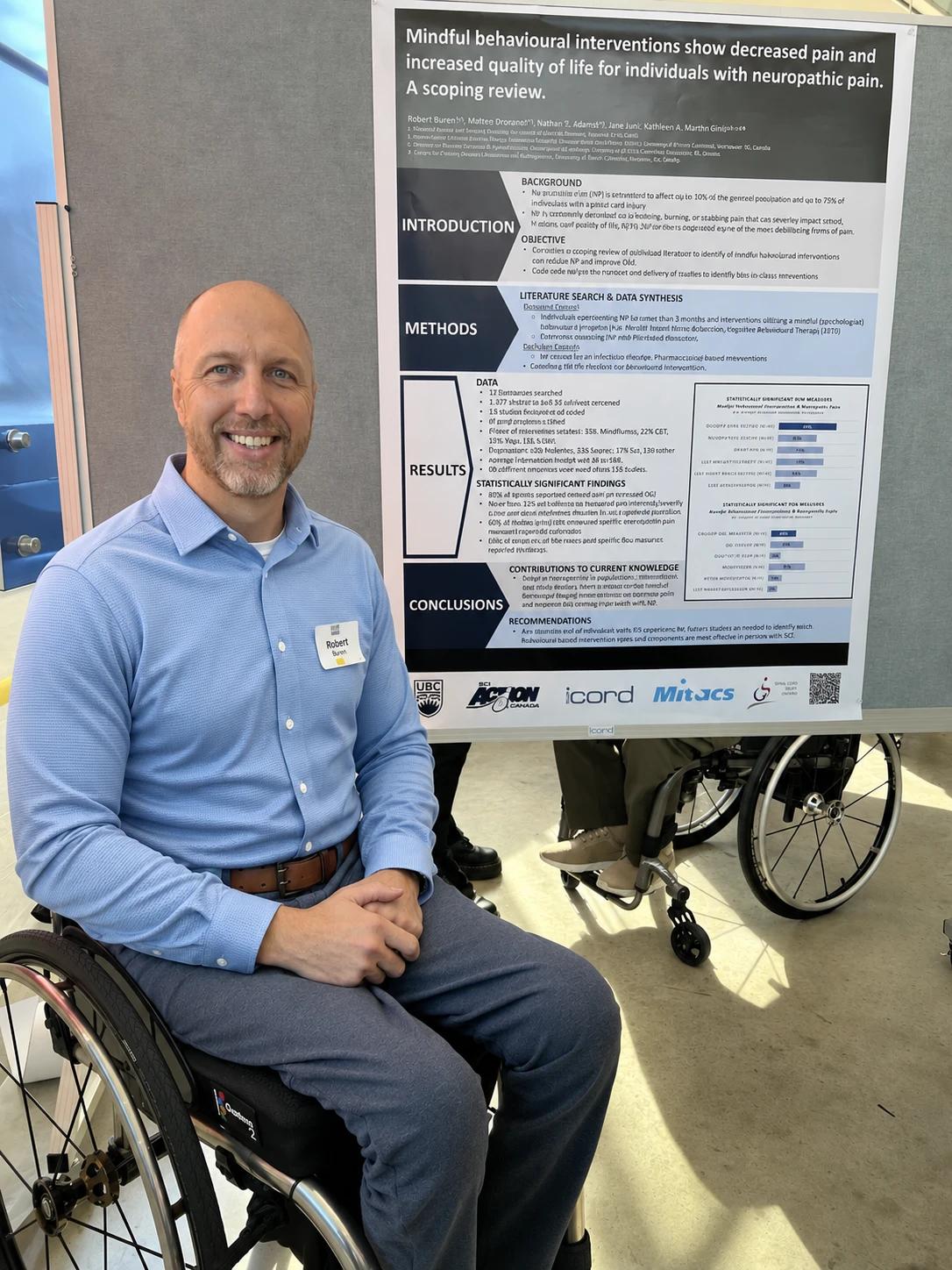
Dr. Buren, seated in his wheelchair and smiling, beside his research poster on mindful behavioural interventions for neuropathic pain.

The PhD

Two questions

Research done with the spinal cord injury community, by someone who lives with the injury and the pain.

Dr. Buren earned his PhD in Kinesiology at the University of British Columbia Okanagan, in the SCI Action Lab, under Dr. Kathleen Martin Ginis.

After breaking his back in a mountain bike accident, he set big goals and found ways to accomplish them. The PhD was how he set out to understand how he'd done it, and how he could help others. It began with two questions.

  1. How can we find better answers for pain after spinal cord injury, a pain Robert lives with himself?
  2. Why do people differ so much in their motivation to get up and do hard things?

Great work Robert! You're a champion for people with SCIs and others dealing with pain issues.

Rick WattersPeer Support Manager, Spinal Cord Injury Ontario

The dissertation · 2026

Behaviour first

Three linked studies: a scoping review of past research, a national survey, and a small N-of-1 intervention study.

Emotions, Thoughts, Behaviours, and Pain After Spinal Cord Injury: A Behaviour-First Approach to Neuropathic Pain

The idea at its centre: behaviour is the part people can control. Pain is hard to change directly, but what people do each day can be changed. That idea runs through Robert's talks and workshops as Behaviour First.

The full text is under embargo for now, while the final study goes through peer review.

  • DegreePhD in Kinesiology, focused on solving spinal cord injury pain through behaviour change interventions
  • UniversityUniversity of British Columbia (Okanagan)
  • LabSCI Action Lab
  • SupervisorDr. Kathleen Martin Ginis
  • Year2026

Lead research

Papers Robert led

The three studies from the dissertation and a perspective piece, each with a short note in plain language.

Epidemiologic Reviews

Study 1 · Scoping review · 2026

A review of non-pharmacological therapies for neuropathic pain

A review of non-drug, mind-body approaches to neuropathic pain. It maps what appears to work, and identifies the health inequities and research gaps that still need closing.

Buren, R., Ponzano, M., Adams, N., Jun, J., & Martin Ginis, K. A. (2026). Addressing health inequities in treating neuropathic pain: A scoping review of cognitive behavioural therapies, mindfulness, and meditative-based interventions. Epidemiologic Reviews.


Archives of Physical Medicine and Rehabilitation

Study 2 · National survey · 2026

The Canadian SCI Pain Survey

A national survey of 200 Canadians living with spinal cord injury. Psychological and social factors, not just the injury, were strongly linked to how much pain interferes with daily life. How a person relates to their pain matters, and that gives us something to work with.

Buren, R. C., Noguchi, K. S., Holtzman, S., & Martin Ginis, K. A. (2026). Psychosocial predictors of spinal cord injury pain: The Canadian Spinal Cord Injury Pain Survey. Archives of Physical Medicine and Rehabilitation.

The University of British Columbia

Study 3 · Intervention study

A behaviour-first program

Robert's dissertation intervention. It tested a remotely delivered, behaviour-first self-management program for spinal cord injury pain. The paper and its findings are under embargo for now, until it is published.

Buren, R., Baumgart, J. K., & Martin Ginis, K. A. (2026). Changes in pain severity and interference following a behaviour-first self-management intervention for spinal cord injury.

Under review · Embargoed for now
SCI journal

Perspective · Accepted

SCI pain research: a call for new approaches

With a population this varied and pain this complex, randomized controlled trials (RCTs) may not be the best fit. Robert calls for self-managed approaches, tested one person at a time.

Buren, R. Solving SCI pain: Insights from lived experience and a call for new approaches. Accepted, not yet published.

Accepted · Link coming

Co-author

More peer-reviewed work

Papers Robert contributed to during his PhD, on exercise, sport and activity after spinal cord injury.

  • Ponzano, M., Buren, R., Adams, N. T., Jun, J., Jetha, A., Mack, D. E., & Martin Ginis, K. A. (2024). Effect of exercise on mental health and health-related quality of life in adults with spinal cord injury: A systematic review and meta-analysis. Archives of Physical Medicine and Rehabilitation, 105(12), 2350-2361.DOI for the exercise and mental health review (opens in a new tab)
  • Cheung, L., Buren, R., Benn, N. L., Alton, C., Craven, B. C., Marzolini, S., & Musselman, K. E. (2025). The feasibility and effect of a peer-facilitated, remote handcycling sport program for aging adults with spinal cord injury or disease: A mixed methods case series. Spinal Cord Series and Cases, 11(1), 26.DOI for the remote handcycling program study (opens in a new tab)
  • Cheung, L., Benn, N. L., Buren, R., & Musselman, K. E. (2026). Applying an integrated knowledge translation partnership approach during a remote sport program for aging individuals with spinal cord injury: A descriptive qualitative study. Disability and Rehabilitation.DOI for the knowledge translation partnership study (opens in a new tab)
  • Adams, N. T., Tong, B., Buren, R., Ponzano, M., Jun, J., & Martin Ginis, K. A. (2024). A scoping review of acute sedentary behaviour studies of people with spinal cord injury. International Journal of Environmental Research and Public Health, 21(10), 1380.DOI for the sedentary behaviour review (opens in a new tab)

From research to the room

How it shows up in talks

The research is where the Behaviour First approach comes from. In talks and workshops, Robert puts it into plain language that is easy to grasp and use, for any audience.

  • The ScienceThe idea and the six-step process, explained without the jargon.Read more about The Science
  • SpeakingFour keynotes, including We Can Reduce Chronic Pain.See the talks
  • We Can Reduce Chronic Pain: clinician workshopFor clinical and rehab teams. Robert shares his doctoral research and the behaviour-first approach.See the workshop
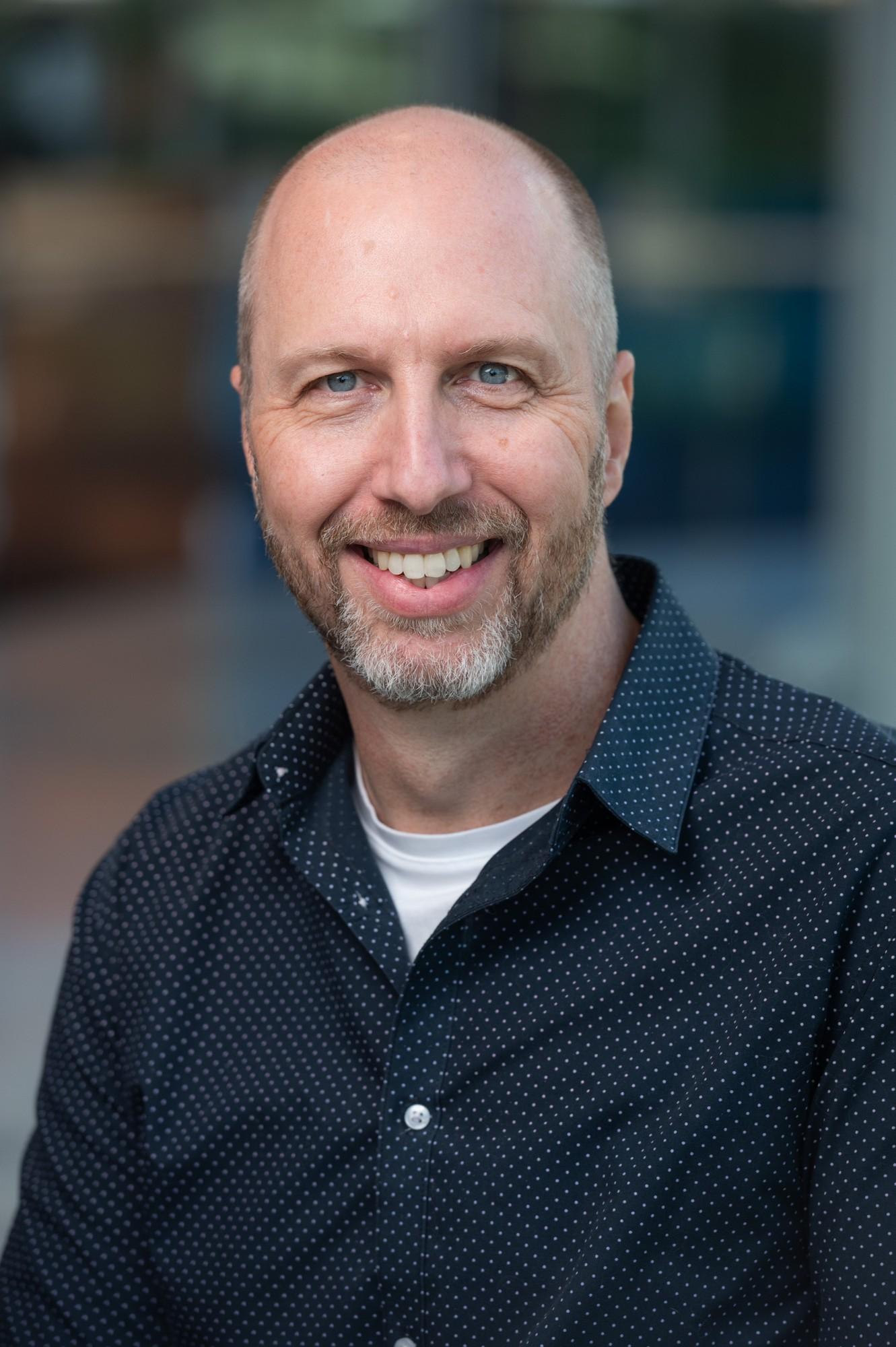
Dr. Buren smiling warmly at the camera, in a navy polka-dot shirt.

Book Robert

Ready to do the work?

Tell Robert about your event, your audience and what you want people to do differently. Share with him where you're at and where you're hoping to go.